The 5 Best Budget Laptops Under $600 for Students in 2026
Deal Nerd Hub uses affiliate programs. If you snag a deal through our links, we may receive a small commission at no extra cost to you. Thanks for supporting the hunt!

Last Updated on 9 months ago by Deal Nerd Hub Staff
Smart tech for savvy students: Why you don’t need to spend four figures for a degree-ready machine in 2026
College students and parents shopping on their behalf have plenty of laptops to choose from. For anyone looking for something cheaper than a MacBook that’s not a Chromebook, a Windows laptop under $600 gets the job done.
As students settle into the spring 2026 semester, budget laptops are getting a serious upgrade. Forget plasticky builds and skimpy 4GB RAM, they’re history. With AI learning tools and power-hungry browsers now standard, students demand real performance headroom.
At Deal Nerd Hub, we’ve scoured the latest inventory for the five laptops delivering unbeatable price-to-performance. Each packs 16GB RAM and a 512GB SSD minimum. Our recommended baseline for thriving through a four-year degree.
1. The Overall Winner: Acer Swift Go 14 (2025/2026 Model)

Best for creators and students who want a lightweight laptop with a top-tier screen.
Why it’s a Deal: Often found for $549–$599 on sale.
The Nerd Insight: This is one of the few laptops under $600 that features a 120Hz OLED display. While OLEDs can actually cause fatigue for some due to “flicker” (PWM dimming), this specific model is TÜV Rheinland Eyesafe 2.0 certified. This means it filters out harmful high-energy blue light at the hardware level without making the screen look yellow—a massive win for marathon study sessions.
Key Specs:
- Display: 14″ 2.8K (2880 x 1800) OLED, 120Hz refresh rate, 100% DCI-P3 color.
- Performance: Intel Core Ultra (Series 2 “Panther Lake”) or AMD Ryzen AI 300.
- Portability: Ultra-lightweight at 2.8 lbs; 0.59″ thin with a 180° flat-lay hinge.
2. The Battery King: Acer Aspire 16 AI (2025/2026 Model)

Best for “all-day” power users who need extreme battery life and future-proof AI capabilities.
Why it’s a Deal: Often found for $549–$649 on sale.
The Nerd Insight: This is the “sleeper hit” of 2026. By using the Qualcomm Snapdragon X (ARM architecture), it behaves more like a smartphone than a PC—it wakes up instantly and gets nearly 27 hours of battery life. Because it has a dedicated 45 TOPS NPU, it can run Windows Recall and Cocreator locally without heating up your lap or slowing down your Chrome tabs.
Key Specs:
- Display: 16-inch WUXGA (1920 x 1200) IPS, 120Hz refresh rate, 100% sRGB
- Performance: Qualcomm Snapdragon X (8-core) with 45 TOPS NPU
- Portability: 3.4 pounds; incredibly efficient cooling (rarely uses its fans)
3. The Infinite Battery Value Pick: HP OmniBook 5 (AI PC)
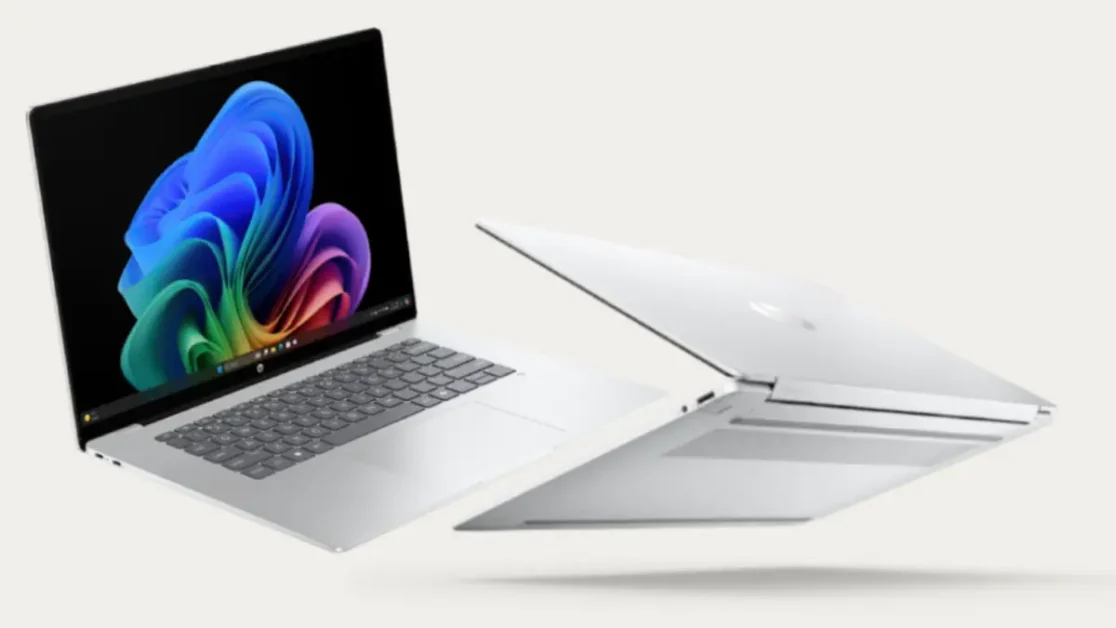
Best for students and professionals who never want to carry a charger and want a premium OLED screen without the Spectre price tag.
Why it’s a Deal: While the 16-inch model retails for more, the 14-inch Snapdragon edition is the ultimate value play. It’s frequently discounted to $549–$599 at major retailers, effectively replacing the old Pavilion Aero as the premium-for-less king.
The Nerd Insight: If the OmniBook 3 is the reliable sedan, the OmniBook 5 is the long-range EV. By opting for the Snapdragon X Plus version, you aren’t just getting an AI chip; you’re getting an ARM-based architecture that is hyper-efficient. We’re talking about up to 34 hours of video playback on a single charge. For the first time, a Windows laptop actually rivals (and sometimes beats) the MacBook Air in endurance. Plus, HP finally ditched the budget feel: the OmniBook 5 uses recycled metals and a much stiffer chassis than the old Aero 13, so it doesn’t flex when you type.
Key Specs:
- Display: 14-inch or 16-inch 2K OLED option (stunning blacks and color pop that you won’t find on the OmniBook 3)
- Performance: Snapdragon X Plus (8-core) or Intel Core Ultra 5
- Portability: Starting at 2.98 pounds; remarkably light for a laptop with this much battery life
4. The Best 2-in-1: Lenovo Yoga 7i (14-inch)
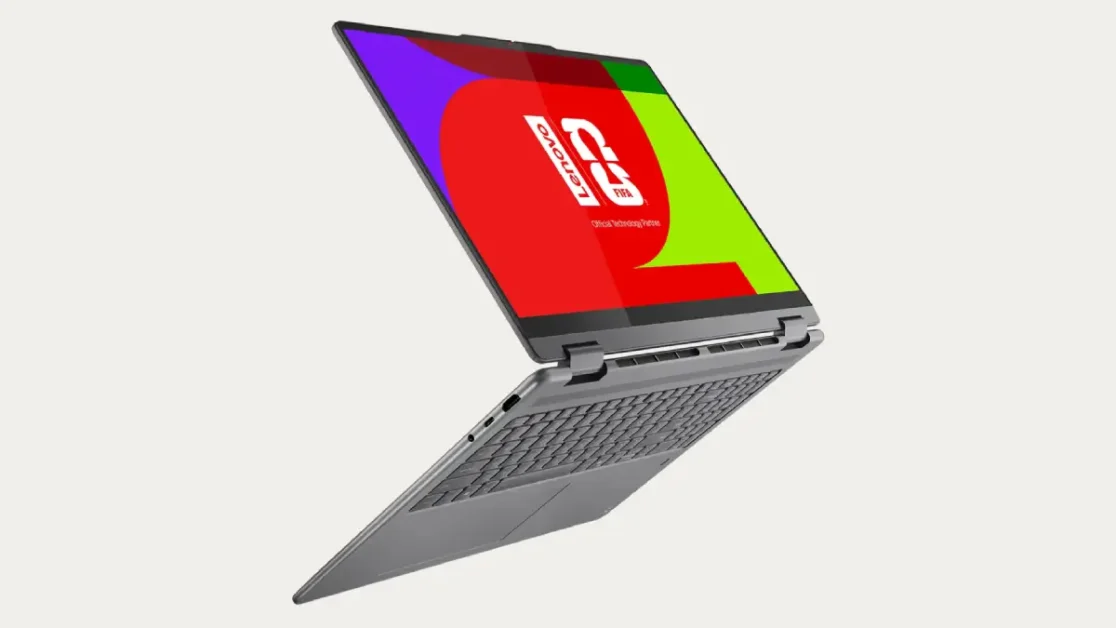
Best for users who want a flexible tablet/laptop hybrid for note-taking, drawing, or media consumption.
Why it’s a Deal: Often found for $649–$749 on sale.
The Nerd Insight: Unlike most budget 2-in-1s that use heavy glass and weak hinges, the Yoga 7i uses a high-tensile 360° hinge and a PureSight OLED display. While touchscreens usually introduce a grainy texture on OLEDs (the screen door effect), Lenovo’s 2026 digitizer is nearly invisible, making it one of the few convertibles where the touch layer doesn’t ruin the color clarity.
Key Specs:
- Display: 14-inch 2.8K (2880 x 1800) OLED Touch, 120Hz, 100% DCI-P3
- Performance: Intel Core Ultra 5/7 (Series 2 Lunar Lake) or Ryzen AI 300
- Portability: 3.1 pounds; premium aluminum chassis with 360° versatility
5. The “Dark Horse” Gaming/CS Pick: ASUS Vivobook 16

Best for home office use and multitasking where screen real estate is the number one priority.
Why it’s a Deal: Often found for $499–$559 on sale.
The Nerd Insight: Most 16-inch laptops at this price point are “desk-bound” because they are heavy and have poor battery life. However, the 2026 Vivobook features US MIL-STD 810H durability, meaning it survives the flex and bumps that usually kill cheaper large-screen laptops. It also includes an Antimicrobial Guard, which is a silver-ion coating that inhibits 99% of bacterial growth—perfect for shared family or office spaces.
Key Specs:
- Display: 16-inch WUXGA (1920 x 1200) IPS, 16:10 aspect ratio, 300 nits
- Performance: Ryzen AI 7 or Intel Core Ultra 5 (Series 2)
- Portability: 4.1 pounds; surprisingly thin for its size at 0.70-inches